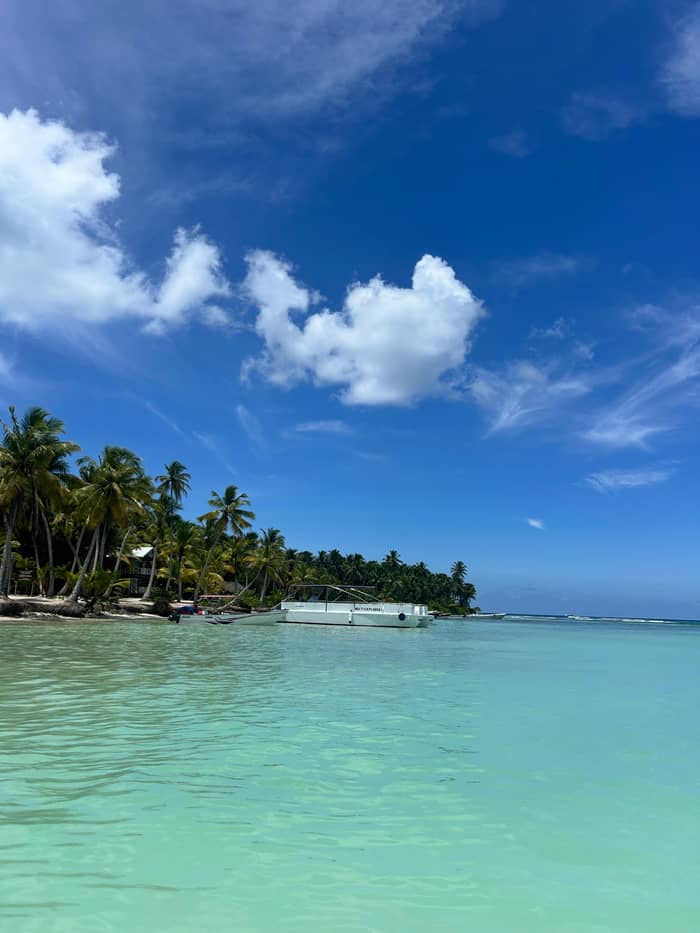
Small group
Small-group village day
Nursery and beach lunch
- Village stopMano Juan with turtle nursery
- Length8 to 11 hours
- Pricefrom $125
Choose your stop
Map of 25 stops
Choose a route, then tap a marker or stop for a note and Google Maps.
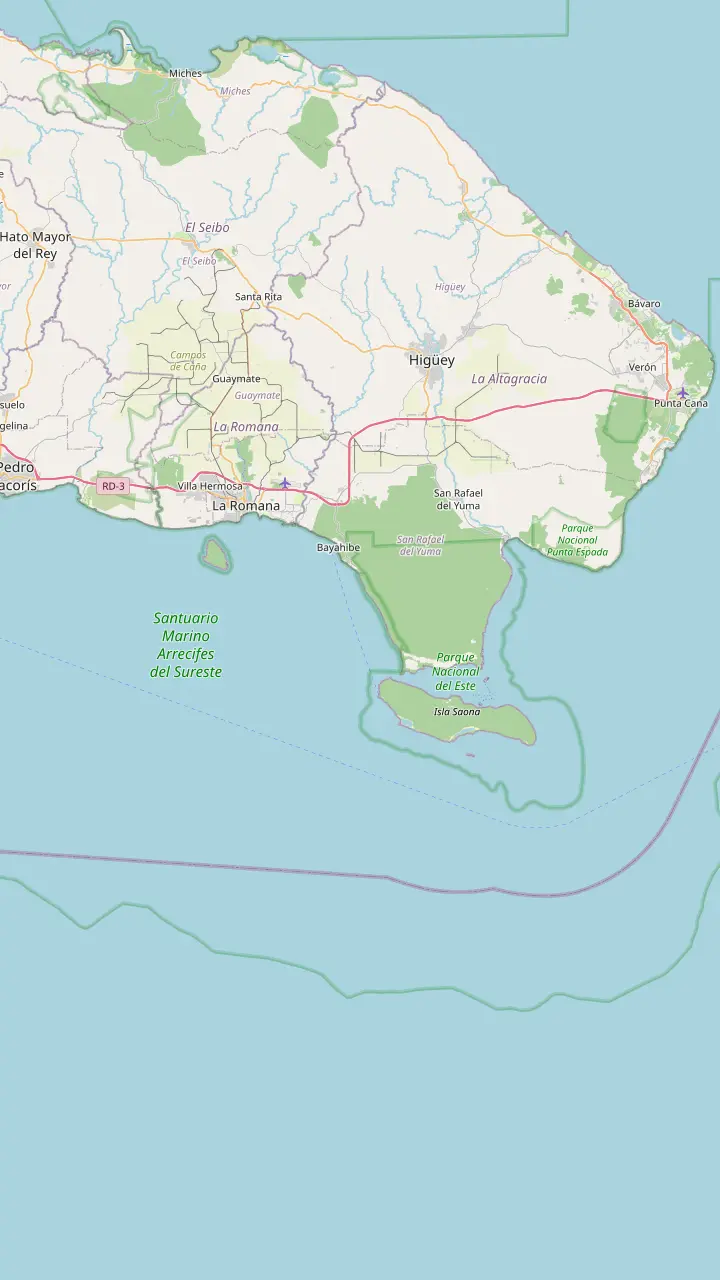
Most Saona trips leave from the small waterfront of Bayahibe village, which the ministry calls the main gateway to the island.
Google MapsThe park's boundary line runs between the villages of Boca de Yuma and Bayahibe, on the mainland side of the park.
Google MapsThe land part of the park is reached from Bayahibe village, with marked trails to caves and freshwater springs.
Google MapsThe Catuano channel separates the peninsula from Saona, and a small-group catamaran listing puts a guided snorkeling stop at Catuano.
Google MapsMano Juan is the only inhabited part of Saona, a fishing village with a turtle sanctuary.
Google MapsCanto de la Playa is a beach named by the VIP and small-group listings, for an hour of free time or for snorkeling.
Google MapsCatalina is the island closest to La Romana, popular for diving and snorkeling, and a separate excursion from Saona.
Google Maps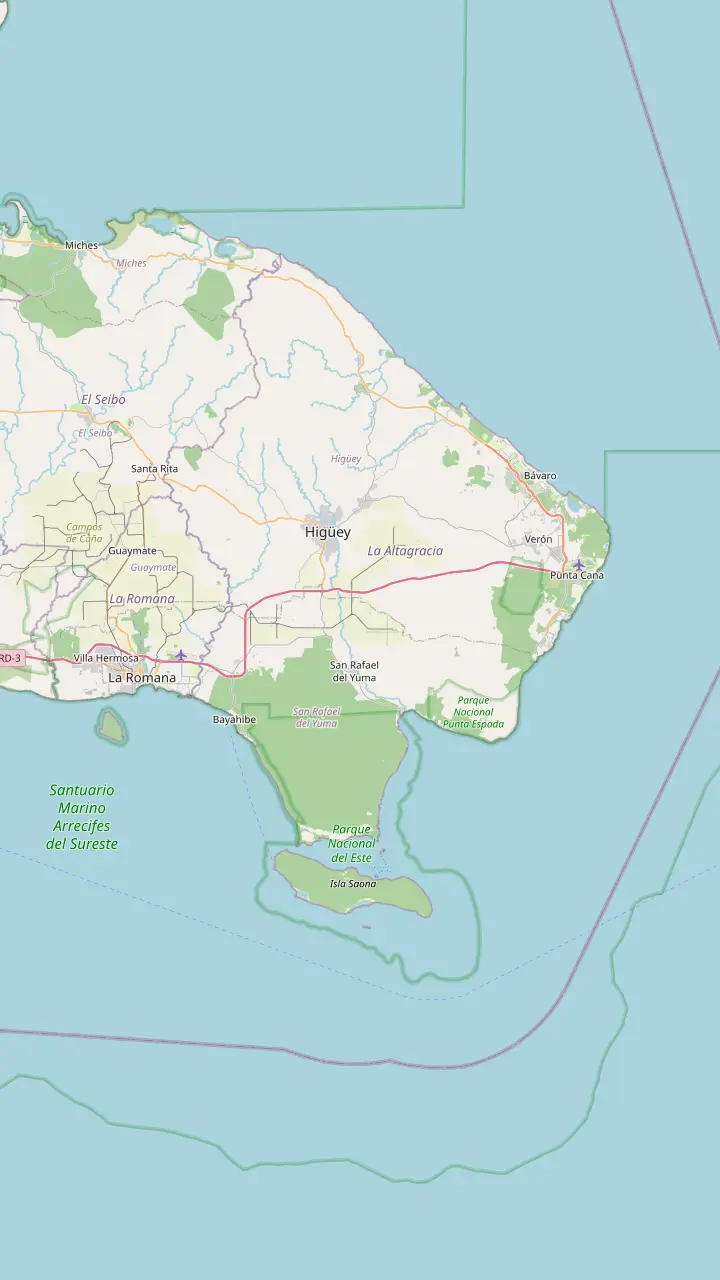
Uvero Alto is one of the pickup points named by the listings that run the Saona day from the north of the resort coast.
Google MapsBavaro is a pickup point of the home tour, which also lists Bayahibe as the other.
Google MapsThe ministry puts the Punta Cana airport 15 minutes from Punta Cana, 30 minutes from Bavaro and 45 minutes from Macao and Uvero Alto.
Google MapsLa Romana is 20 minutes by road from Bayahibe, and the ministry names it as a place to hire a boat for Palmilla.
Google MapsMost Saona trips leave from the small waterfront of Bayahibe village, which the ministry calls the main gateway to the island.
Google MapsSaona lies 19 km south of the mainland and covers 110 km2 inside the national park.
Google Maps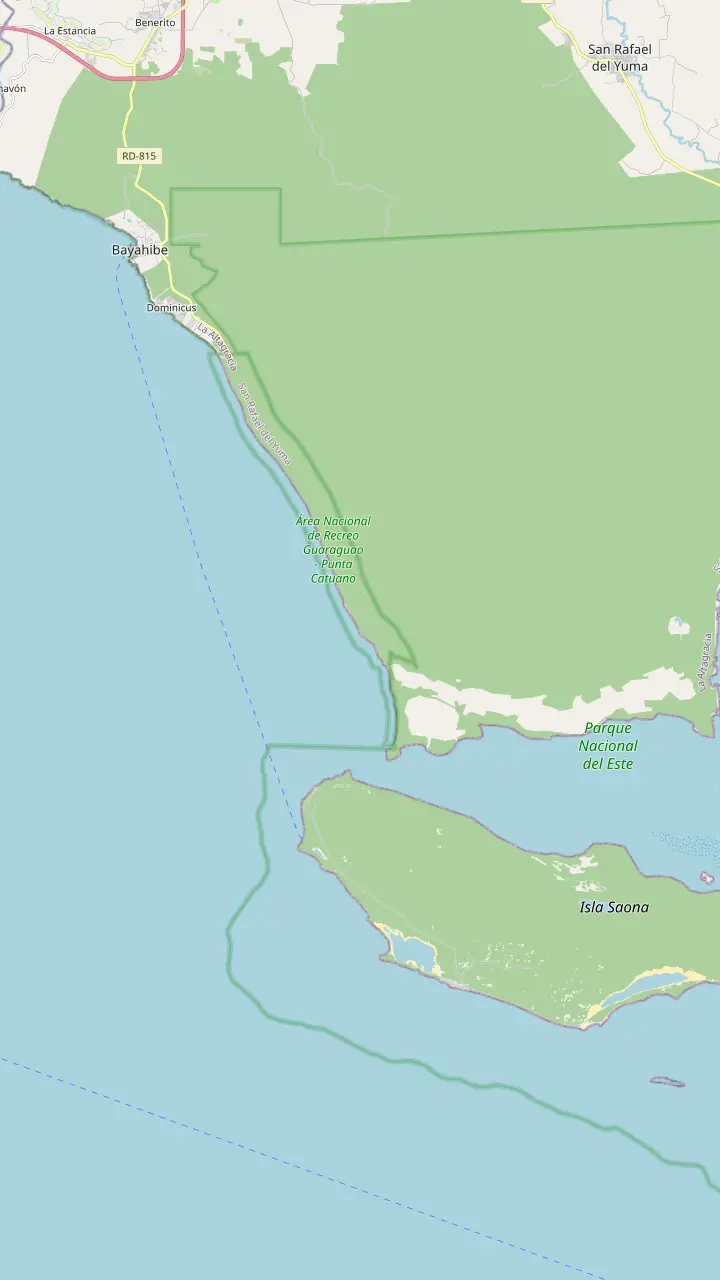
Most Saona trips leave from the small waterfront of Bayahibe village, which the ministry calls the main gateway to the island.
Google MapsPalmilla is a white beach facing a wide, shallow natural pool, and a stop on every Saona tour by the ministry's account.
Google MapsThe Catuano channel separates the peninsula from Saona, and a small-group catamaran listing puts a guided snorkeling stop at Catuano.
Google MapsMano Juan is the only inhabited part of Saona, a fishing village with a turtle sanctuary.
Google MapsCanto de la Playa is a beach named by the VIP and small-group listings, for an hour of free time or for snorkeling.
Google Maps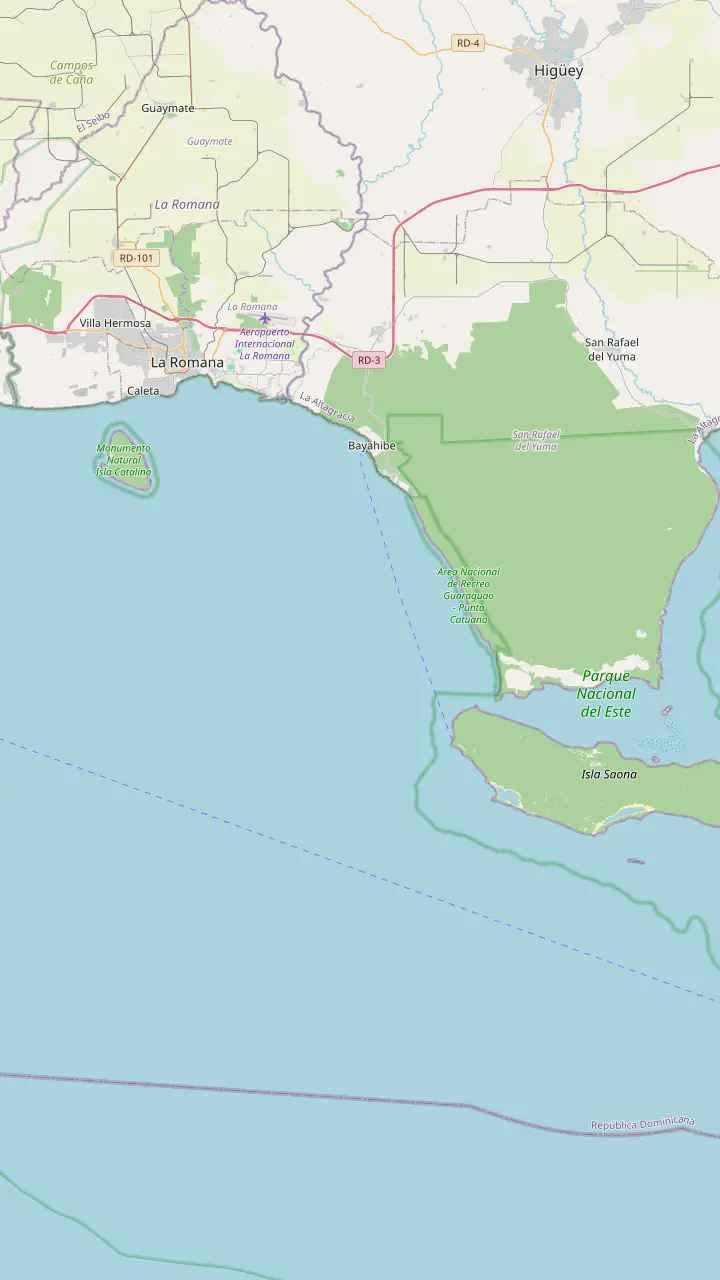
Most Saona trips leave from the small waterfront of Bayahibe village, which the ministry calls the main gateway to the island.
Google MapsPlaya Dominicus is a long public beach near Bayahibe and the first beach in the Caribbean to get Blue Flag certification.
Google MapsPalmilla is a white beach facing a wide, shallow natural pool, and a stop on every Saona tour by the ministry's account.
Google MapsThe Catuano channel separates the peninsula from Saona, and a small-group catamaran listing puts a guided snorkeling stop at Catuano.
Google MapsMano Juan is the only inhabited part of Saona, a fishing village with a turtle sanctuary.
Google MapsCanto de la Playa is a beach named by the VIP and small-group listings, for an hour of free time or for snorkeling.
Google MapsCatalina is the island closest to La Romana, popular for diving and snorkeling, and a separate excursion from Saona.
Google MapsBase map © OpenStreetMap contributors
The fishing village behind the beach photographs, the protected area that surrounds it, what the official pages say about turtles, plastic and building, and what a stay would involve.
Editorial team, saonaisland.click · Updated November 24, 2026 · Takes 7 min
Overview
Saona is not a free-standing resort island. It belongs to a national park that the Ministry of Environment places in the extreme south-east of the country, between the provinces of La Romana and La Altagracia.4 The island covers 110 km2 and lies south of the peninsular part of the park.9 The tourism ministry adds that Saona sits 19 km south of the mainland.10 The park was first named Parque Nacional del Este and renamed in 2014 after the Taino warrior Cotubanama.11
What does the park protect? The tourism ministry says it counts more than 500 flora species and 300 types of birds, along with long beaches on Saona and Catalina.12 The Ministry of Environment gives a tighter bird figure, with 112 species recorded in the park, 8 of them endemic to Saona Island and 11 to the Caribbean.13 These counts are not the same thing, and I show both rather than choosing. The environment ministry names sea grape, bayahonda and mahogany as the most representative plants.14
The sea belongs to the park as much as the land. The tourism ministry calls Saona famous for mangroves, coral reefs and palm-fringed beaches,15 and the park's coastline is rich in snorkeling and diving sites.16 On the mainland side, the land part of the park is reached from Bayahibe village, with marked trails to caves and freshwater springs.17 The listings I checked all stay on the water and the island, so a visit to the trails is a separate plan that deserves its own day.
Numbers that disagree
| Topic | The tourism ministry | The Ministry of Environment |
|---|---|---|
| Birds in the park | 300 types of birds12 | 112 species recorded, 8 endemic to Saona13 |
| People in Mano Juan | No figure on the pages read | Approximately 500, or more than 300 in a press release quote5,6 |
| Size of Saona | 110 km23 | 110 km29 |
| Park name | Also known as Parque Nacional del Este23 | Renamed in 2014 from that name11 |
The figures come from the tourism ministry and the Ministry of Environment, which count different things; both are shown instead of picking a winner.12,13
Mano Juan on Saona Island is where the island becomes a place instead of a backdrop. The tourism ministry calls it the only inhabited portion of Saona,1 and describes a quiet fishing village near Flamingo Lagoon, noted for its brightly colored cabins and its turtle sanctuary.2 Boat days stop here for a walk, a meal or the sanctuary, and the visit is often short. A small-group listing pairs the village with a beach restaurant lunch and a turtle nursery.
How many people live there depends on who you ask. The Ministry of Environment says the community has a population of approximately 500 people.5 A press release quotes a community association speaking of the more than 300 inhabitants of Mano Juan.6 The figures are not necessarily contradictory, since they come from different speakers, so treat both as an order of magnitude. A village of this size has little room for the crowds the boats bring, and the pace of a visit should reflect that.
The villagers were there before the park. The Ministry of Environment says communities were already settled on the island before it was declared a protected area in 1975.18 Its Saona Sostenible project runs from 2021 to 2024 and covers home repairs, water and sanitation for Mano Juan and a redesign of the tourist flow.20 The ministry also lists a new pier for tourist boats and fishers, and improvements to the Mano Juan and Catuano piers.22 Whether those works are finished is a question I cannot answer from the pages I read.
Birds of the park
The Ministry of Environment records 112 bird species within the park, 8 of them endemic to Saona Island and 11 to the Caribbean.13
Turtles give the village a further identity. The tourism ministry ranks Saona as the leading turtle-nesting site of the Dominican Republic,26 and says the park's beaches, particularly on Saona, hold that role.27 The Ministry of Environment's older page for the park lists turtle nesting observation among the activities of the area.28 NOAA notes that hawksbill nesting in most places occurs between April and November.29 Those months are a rough guide to the nesting calendar, not a promise about any beach.
The listings treat the sanctuary as a stop, with honest caveats. A VIP sunset day includes Mano Juan with the turtle sanctuary, and its notes say turtles are not always there. A small-group day lists the turtle nursery, and its notes say seeing hatchlings is not guaranteed. Another VIP day visits the sanctuary as well. Go with the idea of seeing how the project works, and treat any live animal as a pleasant surprise.
Behave as a guest at a working conservation site. NOAA says not to disturb nesting turtles, nests or hatchlings, and never to feed or touch sea turtles.30,31 Ask before taking photographs of people as well as animals, since the village is a home and not a stage.
Pick your visit
Tap what you want from Saona beyond the beach and read across to the way to get it.
If I want to meet the village
A day that lunches at Mano Juan
A small-group listing lists a beach restaurant lunch in the village.
If I want the turtle sanctuary
A VIP day with the sanctuary
Both VIP listings include it, with no promise of live turtles.
If I want the park's trails
A separate mainland day
The land part of the park is reached from Bayahibe village.17
If I want to stay overnight
Ask the village directly
I found no official lodging list, and the park restricts construction.7
If I want the quietest base
Bayahibe
The ministry calls it the main gateway, 20 minutes from La Romana.24,25
If I care about plastic
Bring a refillable bottle
The resolution targets foam and single-use plastic on Saona.21
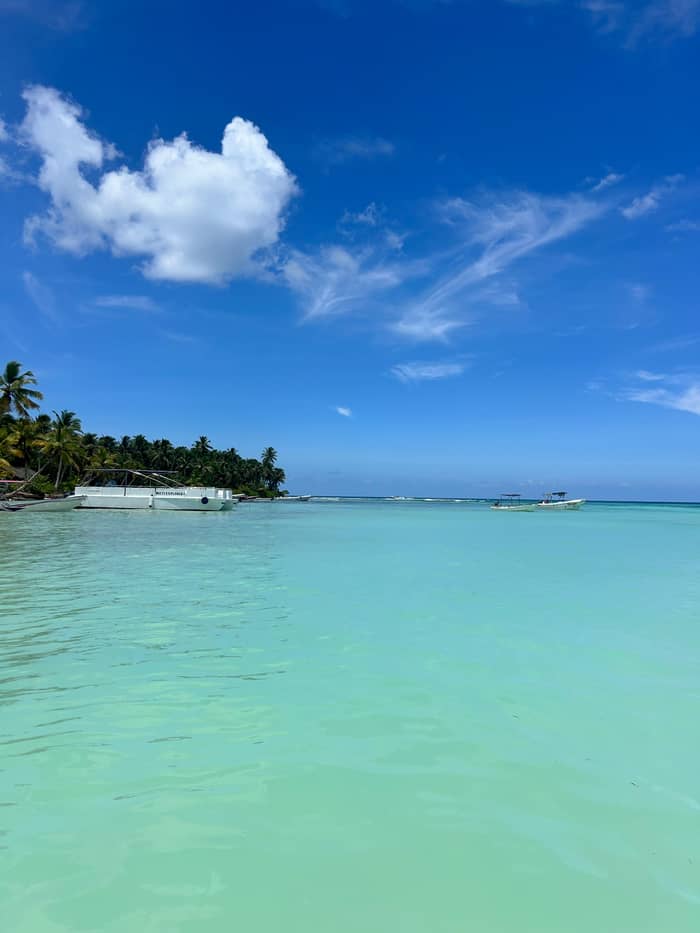
Days that reach the village
Small group
Nursery and beach lunch
VIP day
Sanctuary and Playa Toro
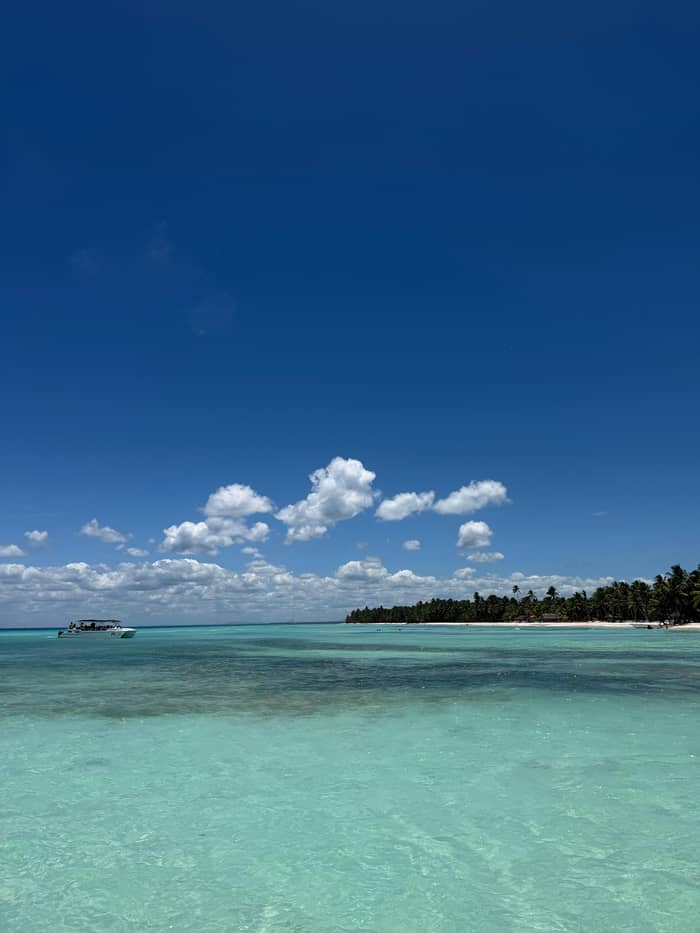
VIP day
Sanctuary and Los Toros
Being a national park changes what may happen on the island. The Ministry of Environment says Cotubanama is a category II protected area, with restrictions on activities and construction.7 The permitted uses for that category include research, education, recreation, nature tourism and ecotourism.44 That frame fits an island with fishing houses, a small number of visitor facilities and no row of resorts, though the ministry's text does not describe it in those words.
Plastic has been singled out. Resolution 0024-2023 aims to eliminate foam and single-use plastic within the islands of Saona and Catalina,21 and a later page says it prohibits them in the national park and the Catalina natural monument.45 Expect the crew to serve water and drinks in a way that respects this, and carry your own refillable bottle. Leave nothing behind on the beach or in the village.
Wildlife has its own list. The 2019 red list resolution counts corals, including starfish, among protected species,19 and the page lists turtles and the manatee too.46,47 It forbids hunting, capture, harassment and trade of the listed species.48 The archived 2016 page of the park also gives an opening time of 8:00 AM, a closing time of 5:00 PM and a cost of 100 Dominican pesos per person.41 That fee is old, so check the current amount with your operator.
Price a visit
Enter how many people travel and compare the village days.
Choose from 3 options
Enter how many people travel and compare the village days.
≈
View≈
View≈
ViewFrom-prices on GetYourGuide, shown at the ECB reference rate. Your exact price is confirmed during booking.
How protection built up
Before protection
Communities were already settled on the island before it was declared protected in 1975.18
The new name
The park, named Parque Nacional del Este at the start, took its current name in 2014.11
Species list
A red list resolution of 2019 counts starfish among protected species.19
Island project
The project runs from 2021 to 2024 and covers homes, water and the tourist flow.20
Plastic rule
Resolution 0024-2023 targets foam and single-use plastic on Saona and Catalina.21
Searches for Saona Island hotels are common, and the answer is awkward. I found no official page that lists hotels on the island. The park's category II status restricts construction,7 and the ministry says that on Saona no action outside the law or against its management plan will be permitted.49 Every listing I checked for this site sells a day trip with pickup and drop-off on the mainland, with no overnight stay.
That does not mean no bed exists, just that I cannot cite a source for one. The villagers live in Mano Juan, and the ministry's project describes repairing homes and bringing water and sanitation to the community.20 If you want to stay overnight, ask an operator or the village association directly and ask what permits apply. Do not rely on a booking site that shows a hotel on the island without naming a source for it.
For a newcomer, base yourself on the mainland. The tourism ministry calls Bayahibe the main gateway to Saona, Catalina and the park, with excursions leaving daily from its pier.24,40 La Romana is 20 minutes from Bayahibe by road, and Punta Cana is approximately 1 hour away.25 A night in Bayahibe gives you an early pier, a short transfer and a choice of boats, and it is the practical answer to the stay question.
Video
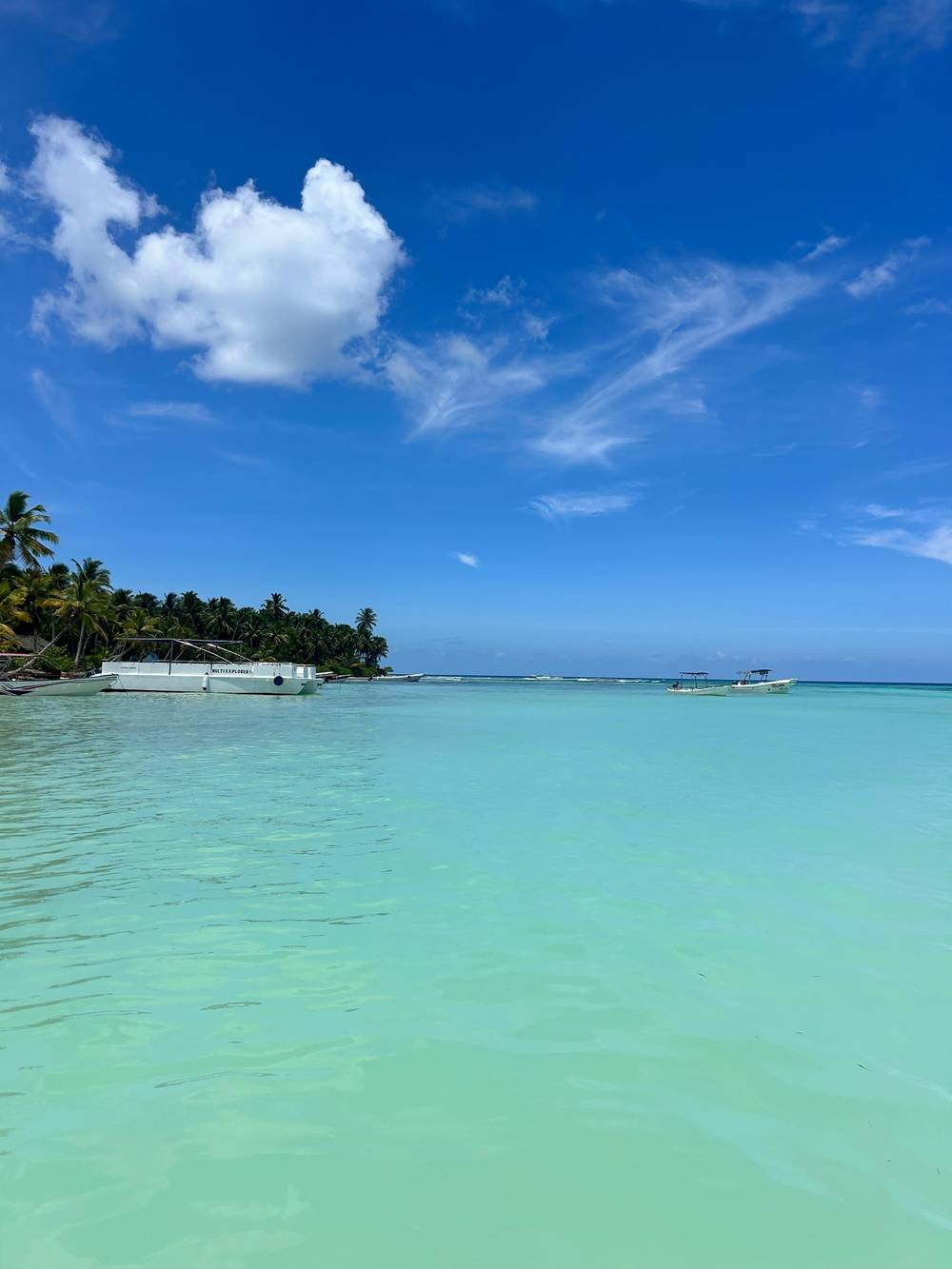
Outdoor Ting on YouTube · The clip loads only after you tap play.
Explore Mano Juan, a peaceful fishing village near Flamingo Lagoon, known for colorful cabins and as a turtle sanctuary.
Visiting well
A Saona Island map shows how close the island sits to the coast and how far it feels. The Catuano channel that separates the island from the peninsula is 6,250 m wide between Punta Aljibe and Punta Balaju, and 1,250 m wide between Punta Catuano and the south point of Calderas Bay, by the Ministry of Environment.37 The map on this page marks Bayahibe pier, Boca de Yuma, the park trails, Catuano, Mano Juan, Canto de la Playa and Catalina.
Place names repeat across the area, so read the labels carefully before you trust a pin or a brochure. Catuano names both the channel and a reef stop, Mano Juan names the village and its beach, and Canto de la Playa names a beach. The land part of the park is reached from Bayahibe.17
History decorates the map. The Ministry of Environment says Columbus visited the coasts of the park, found Saona and sheltered in its waters from a storm.50 That is a story you may hear from a guide, and the ministry's page states it plainly, as a fact about the coast rather than a legend. Use the pins on this page together with your listing's stop list, and ask the crew which landing you will use before you leave the pier.
FAQ
Yes. Saona spans 110 km2 and sits inside Cotubanama National Park.3
The park is a category II protected area with restrictions on construction, and every listing checked is a day trip.7
Sometimes. A sunset VIP listing admits the sanctuary is not always occupied, and a small-group listing makes no promise of hatchlings.
Resolution 0024-2023 targets foam and single-use plastic on Saona and Catalina.21
The ministry says national and foreign visitors exceed 1 million a year.8
The tourism ministry names the Bayahibe village waterfront as the usual starting point for Saona trips.34
Sources
Continue reading
Planning a Saona Island day? Ask a real person here.