Our tour
The site catamaran day
Free cancellation, 24 hours
- Hours8
- CancelFree, 24 hours
- Reviews4,524
Make-your-mind-up tool
Two questions, one month
Say when you travel and how you handle a changed plan, and the day that fits appears with its starting price.
The right fit for you
from $82
An 8-hour day with free cancellation up to 24 hours before, in the cool, dry stretch.
The right fit for you
from $59
An 8-hour catamaran day that offers a reschedule or a full refund in torrential rain or dangerous sea conditions.
The right fit for you
from $92
A day where poor weather brings an alternative date or a full refund, with a village visit added.
The right fit for you
from $104
A speedboat day limited to 20 travelers that guarantees a full refund or a new date if sea conditions cancel it.
Month by month for the boat day: how hot and wet each month runs on the nearest weather records, when hurricane season falls, what to know about sargassum and how operators handle a rough sea.
Editorial team, saonaisland.click · Updated November 24, 2026 · Takes 7 min
Overview
Saona is a tropical island, and the months change less than a weather app suggests. The Ministry of Tourism calls the Dominican Republic a sunny year-round destination, with noontime temperatures from 27°C to 32°C and winter lows between 18°C and 23°C.5,6 What does change is the rain, the heat, the storm risk and how rough the sea is on the day.
The nearest long records are the Punta Cana airport, 57.6 km away on the mainland, for temperature, and the Mona Island station, 80.2 km away, for rainfall, both averaged over 1991 to 2020.7 On that record the average daily high runs from 29 °C in January to 32.2 °C in August, and the average daily low from 21 °C in January to 24.2 °C in July.7,7,7
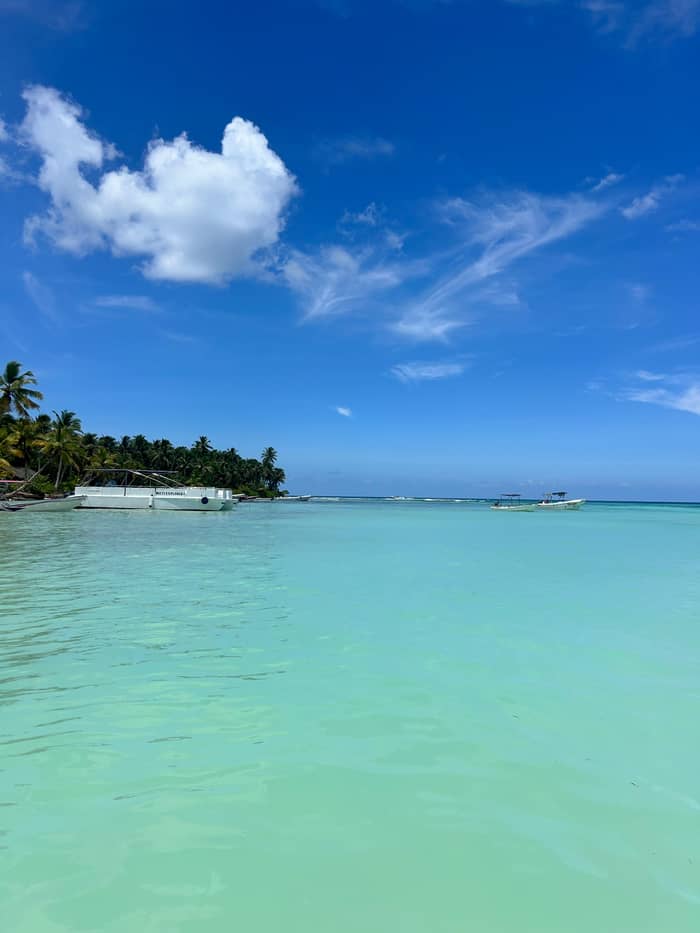
No official source gives a month-by-month table of water clarity, so this page does not invent one. The Ministry of Tourism describes the island as a tropical escape where long stretches of brilliant white sand and giant coconut trees seem to melt into iridescent turquoise waters, and the sea you meet on the day depends on the weather of that week.8
December to early March has the most pleasant weather, according to the Ministry of Tourism, with cool breezes on mornings and evenings as low as 18°C and daytime temperatures between 25°C and 27°C.1 By day the airport reads a little warmer, with daily highs averaging 29.6 °C in December, 29 °C in January, 29.4 °C in February and 29.5 °C in March.7,7,7,7
Rain stays fairly low in the same stretch: the Mona Island record shows 55 mm in January, 38 mm in February and 45 mm in March, counting 5, 4 and 4 wet days at the 2.5 mm mark.7,7,7 December is the wettest of these months at 78 mm and 5 wet days.7 A boat day in these months asks for sun protection more than for a rain jacket, and a light layer for the crossing is enough on the coolest mornings.
A cool, dry day is not the same as a quiet one. The Ministry of Tourism says Christmas and Semana Santa are the longest holiday periods of the year for Dominicans, who escape their routine, and some head to the beach, so holiday weeks are worth booking early and confirming with the operator.9 Ask the operator about the pickup time when you book for a holiday week and confirm it again a day before.
Temperature and rain
Hours without sunlight at mid-month alongside days with 2.5 mm or more of precipitation. NOAA records, station Punta Cana airport (temperatures, 57.6 km away) and Mona Island (rainfall, 80.2 km away), 1991 to 2020.7
Summer is the warmest and rainiest season, and humidity is at its most intense from April to October, with day peaks of 32°C and rainstorms that are frequent but short, the ministry says.2 At the airport the daily high climbs from 30.5 °C in April through 31.4 °C in May and 31.7 °C in June to 31.9 °C in July and 32.2 °C in August.7,7,7,7,7
Rain builds into May. The Mona Island record shows 65 mm in April, 101 mm in May, 74 mm in June, 55 mm in July and 95 mm in August, with wet-day counts of 5, 7, 5, 6 and 6 at the 2.5 mm mark.7,7,7,7,7 May shows 101 mm and 7 days with at least 2.5 mm of rain, so even a showery month leaves most days dry on this record.7
Showers are short, but they can reach the boat. One catamaran listing responds to torrential rain or dangerous seas by moving the trip or refunding it in full, and the site tour can be dropped without a fee until a day before. Pack sun cover for the cloudless hours around the showers, since the heat does not ease just because it rained.
How each day handles weather
Our tour
Free cancellation, 24 hours
Weather clause
New date or refund in storms
Weather clause
Full refund or a new date
The US National Hurricane Center dates the Atlantic hurricane season from June 1 to November 30 and sets its peak at September 10, with most activity between mid-August and mid-October.3,4 The Ministry of Tourism gives the same dates and names September as the most active month.12 Those are the official dates, and the practical meaning for a tourist is a calendar with a long season and a short peak.
The ministry adds perspective: the country lies in the storm belt, but the chance of a major hurricane is slim, with only 11 hurricanes over the last century, and while one coast may be affected, another may be completely unscathed.13,14 Hotels and airlines stay ahead of storm information, which leaves travelers time to adjust their plans.15
The Mona Island record shows 110 mm in both September and October, each with 7 wet days at the 2.5 mm mark, and 93 mm in November.7,7,7 Treat these months as the ones where a flexible booking is worth the most, and keep an eye on the forecast as your date nears. Those totals are for the Mona Island station, so read them as a guide to the regional pattern and not as a measurement taken on the island itself.
A year on Saona
December to March
The ministry calls this the stretch with the most pleasant weather.1
April to May
The average high rises to 31.4 °C in May, with 101 mm of rain.7
June to August
Summer is the warmest and rainiest season.2
September
The Atlantic season peaks on September 10.4
October to November
Christmas, Easter
These are the longest holiday periods of the year for Dominicans.9
Looking for Saona Island clear water? The colour on a boat day depends on the sea state and on what floats in it. NOAA's Atlantic Oceanographic and Meteorological Laboratory says sargassum is a common brown algae that floats in dense mats on the ocean surface and is a significant risk to the environment, society and economy of regions in the Caribbean Sea and Gulf of Mexico.16 It distributes weekly experimental Sargassum Index Reports that estimate the risk to coastal areas.10
The tourist board pages used for this guide carry no sargassum calendar, so the honest advice is to check the current report before a trip and not to trust a rule of thumb about months. Operators handle a rough sea by rescheduling: a small-group speedboat listing owes you a refund or a new date if the weather or the sea cancels the activity, and the small-group cruise says sea and weather conditions decide whether the tour runs.
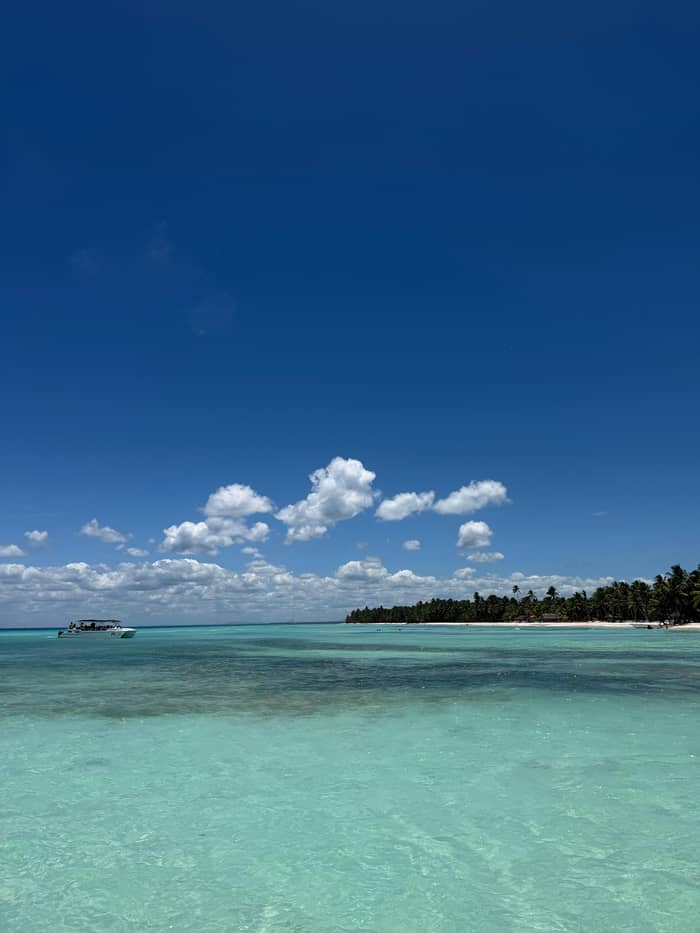
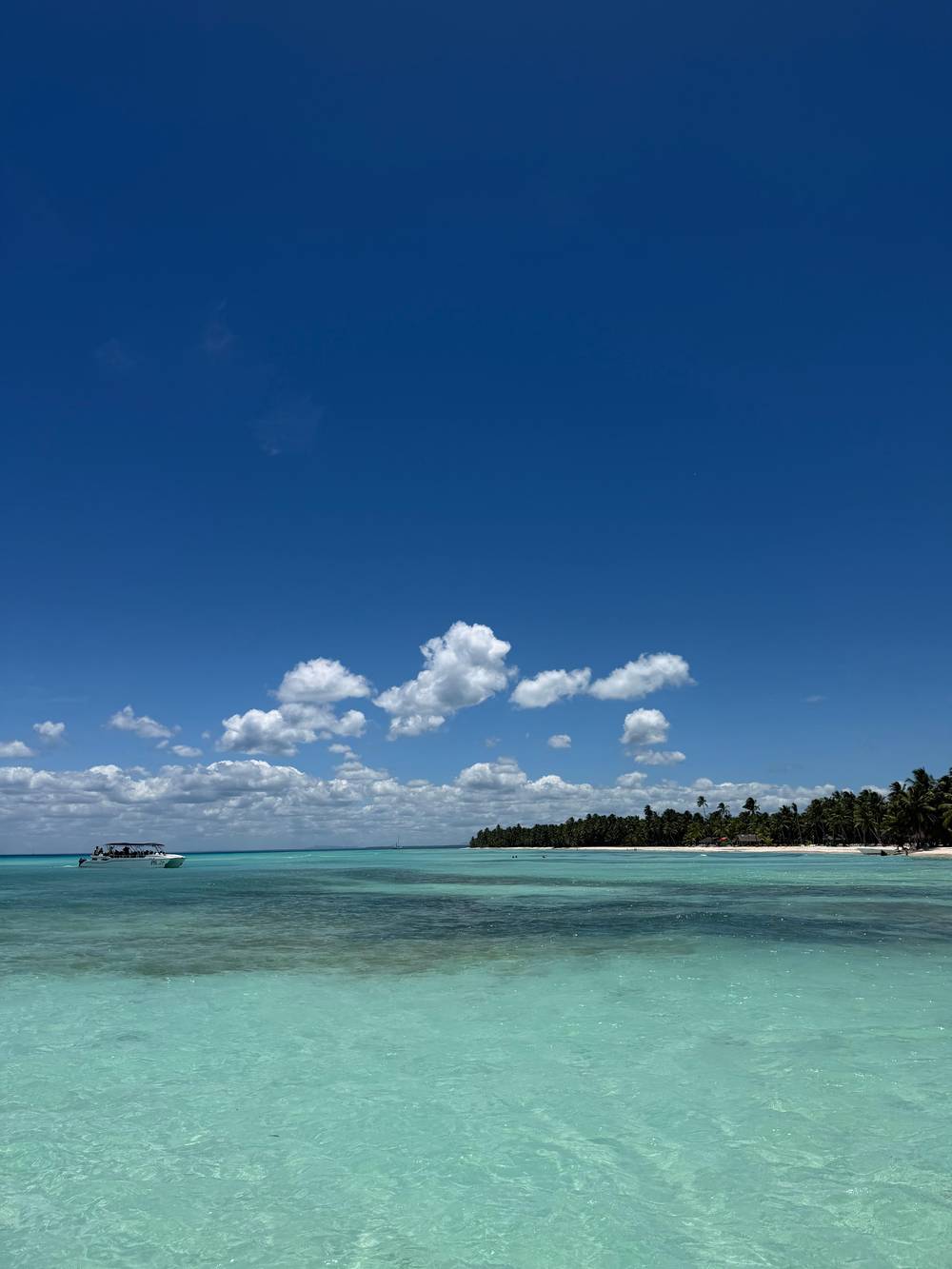
A clear-water day is also a matter of timing. The natural pool and Palmilla beach are the stops that sit in the shallows, and the site tour gives 40 minutes at the pool, so a calm morning matters more than a month on the calendar.17 If the water looks cloudy when you arrive, ask the guide where the clearest swimming is that day.
Video
Jez Travel on YouTube · The clip loads only after you tap play.
Summertime is the warmest and rainiest season in the country, and humidity is at its most intense from April to October.
Before you book
The calendar has a few fixed marks. Christmas and Semana Santa are the longest holiday periods for Dominicans, and some people head to the beach, which is a reason to confirm pickup times and to book a date well ahead.9 The site tour serves no lobster between March 1 and June 1 because of a conservation closure, which matters only if you plan to pay for the VIP option.
Another catamaran listing gives the same March 1 to June 1 window and says its upgraded options carry no lobster in that period, for reasons of biological preservation. Read the inclusions of your booking before you count on lobster at lunch, and treat the closure as a reason to enjoy the buffet instead.
The Saona Island palm trees on the postcards do not change with the month, and neither does the shore they lean over; what changes is the light and the sky behind them. Early and late sun is softer, midday is hard, and a day with broken cloud can give interesting pictures, so do not cancel a trip over a forecast of a few clouds.
Choose December to March if you want the cooler air, and aim for February or March if rain matters most, since December runs wetter at 78 mm.1,7 Expect holiday weeks to add to the demand in the same stretch.9 Choose April or May if you want heat without the deep storm season, and expect more rain in May than in the winter months.7,7 If you can pick only one stretch, December to March is the safest bet on the official and the measured evidence together.
Choose June to August if you do not mind humidity and short showers and you want a long, bright day on the water.2 Choose September to November only with a flexible booking, since the storm peak falls on September 10 and the rain stays high in October and November.4,7,7 In that last stretch the flexible booking is part of the plan and not an afterthought, so choose the listing with the clearest weather clause.
Whatever the month, fix a date, read the weather clause of your listing and keep the free cancellation window in mind. The quiz above the article turns your travel dates and your tolerance for a changed plan into one listing with its starting price. Reading the clause takes a minute and can save a day of disappointment, which is a good trade for a trip that costs a full day.
FAQ
The Ministry of Tourism says December to early March has the most pleasant weather, with days between 25°C and 27°C.1
Summer is the warmest and rainiest season, with humidity highest from April to October and short rainstorms.2
A catamaran listing offers a reschedule or a full refund in torrential rain or dangerous sea conditions.
The site tour serves no lobster from March 1 to June 1, a conservation closure.
NOAA's AOML distributes weekly experimental Sargassum Index Reports that estimate the risk to coastal areas.10
Sources
Continue reading
Planning a Saona Island day? Ask a real person here.